↓
 

Oklahoma City Land Surveying

...local Land Surveyors in the OKC metro area.

Oklahoma City Land Surveying
(405) 546-2121
Oklahoma City Land Surveying
  • Home
  • Civil Engineering
    • Flood Determination
    • Expert Witness
  • Construction Surveying
  • Drone LiDAR Mapping
  • ALTA Title Survey
  • Topographic Survey | Topo Survey
  • Elevation Certificate
  • Land Surveying
  • Boundary Surveying
  • About Us
  • Locations
    • Columbiana
  • Blog
  • Contact Us
Home 1 2 3 … 5 6 >>

Post navigation

← Older posts

Oklahoma City Land Surveying

Oklahoma City Land Surveying Posted on January 3, 2017 by OklahomaCitySurveyorJuly 15, 2024

Welcome to Oklahoma City Land Surveying

Land SurveyorWelcome to our site. We want to provide you with information on Land Surveying in general and specifically in the City of Oklahoma City, Oklahoma​, and the Brazos County, Oklahoma area. If you have any land surveying questions, you’ve come to the right place.


Land Surveying is a very important industry, and it has been around for ages. To know more about the basics of land surveying, you can click here.

Land Surveyors are professionals who measure and make precise measurements to determine the size and boundaries of a piece of real estate.  While this is a simplistic definition, this is one of the most common types of surveying related to home and land owners. To know more about what a land surveyor does, click here.

What you can expect from Oklahoma City Land Surveying

If you need assistance on any land surveying services, our surveyors have the proper experience and credentials. We strive to give good customer service as well.

Oklahoma City Land Surveying offers different land surveying services. We also offer Boundary surveying, percolation & soil testing, subdivision design and layout, topographic surveying, construction surveying and layout, and pipeline surveying services.

How to contact Oklahoma City Land Surveying?

CALL Oklahoma City Land Surveying TODAY at (405) 546-2121 to discuss your land survey needs. You can also send us a message by filling out the form on the right or going to our Contact Page.

Posted in ALTA Land Title Survey, boundary survey, land surveying, land surveyor, topographic survey | Tagged land surveying, land surveyor natchez ms, land surveyors, Oklahoma City Land Surveying

Which Type of Land Survey Do You Actually Need?

Oklahoma City Land Surveying Posted on May 29, 2026 by OklahomaCitySurveyorMay 28, 2026
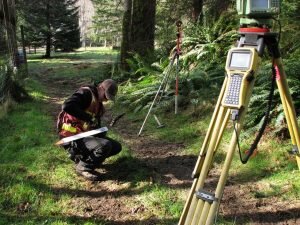
Land surveyor using equipment at a construction site for different types of land survey projects

The most common types of land surveys are boundary, topographic, ALTA/NSPS, construction staking, as-built, subdivision, and right-of-way surveys. Each one has a different purpose. Boundary surveys mark property lines, topographic surveys map the land’s shape, and ALTA surveys serve commercial real estate deals. The type you need depends on your project.

Not all land surveys are the same. A survey for buying a home is very different from one for building a road or splitting a lot into smaller parcels. Each type has its own purpose, its own level of detail, and its own price. If you ask for the wrong one, you can waste time and money. 

Why the Type of Survey Matters

Picking the right survey saves you from costly mistakes. A lender, a builder, and a city planning office may each ask for a different kind. Order the wrong one and you might have to pay for a second survey later. Knowing the basic types ahead of time helps you ask for exactly what you need the first time around.

Boundary Survey

A boundary survey finds and marks the legal edges of a property. It is the most requested survey type and is often used before building a fence, settling a dispute, or buying a home.

A boundary survey is the starting point for most projects. The surveyor researches records and measures the land to confirm where your property begins and ends. This is the survey most homeowners think of first. 

Topographic Survey

A topographic survey maps the natural and man-made features of a piece of land, including hills, slopes, trees, and buildings. Engineers and architects use it to plan construction and drainage.

While a boundary survey looks at where the edges are, a topographic survey looks at what the land actually looks like. It records elevation, contours, and features such as streams and existing structures. Designers rely on this data to plan grading, drainage, and where to place a new building.

ALTA/NSPS Land Title Survey

An ALTA/NSPS survey is a detailed survey built for commercial real estate deals. It follows national standards and shows boundaries, easements, and encroachments so lenders and title companies can insure the property.

This is one of the most thorough surveys available. It meets strict standards set by the American Land Title Association and the National Society of Professional Surveyors. Banks and title insurers usually require one before a commercial property changes hands. 

Construction Staking

Construction staking marks where buildings, roads, and utilities should go on a job site. Surveyors place stakes in the ground so contractors build exactly where the plans call for.

Once a project is designed, construction staking turns those plans into marks on the ground. The surveyor sets stakes that show crews where to dig, pour, and build. Clear communication between the engineer, surveyor, and contractor keeps the project on track and prevents expensive errors.

As-Built Survey

An as-built survey records exactly how a project was built after construction is finished. It compares the final result to the original plans and notes any changes made along the way.

Building rarely goes exactly as drawn. An as-built survey documents what was actually constructed, from the position of a building to the path of underground pipes. Owners, cities, and future builders rely on these records when they maintain or expand the site later.

Subdivision Survey

A subdivision survey divides one larger piece of land into two or more smaller lots. Each new lot gets its own legal description so it can be sold or developed separately.

When a developer or landowner wants to split a parcel, a subdivision survey makes it official. The surveyor maps the new lots, marks the corners, and prepares documents for local government approval. Curious about the bigger picture of dividing land? See our guide on subdividing your property.

Right-of-Way Survey

A right-of-way survey defines a strip of land set aside for roads, railroads, power lines, or pipelines. It shows where public or shared access crosses private property.

A right-of-way survey maps corridors that others have the right to use or maintain. Cities, utility companies, and transportation agencies order these surveys to plan and protect access for roads and infrastructure.

Quick Comparison of Survey Types

Survey TypeMain PurposeWho Usually Needs It
BoundaryMark property linesHomeowners, buyers
TopographicMap land features and elevationEngineers, architects
ALTA/NSPSDetailed commercial title surveyLenders, title companies
Construction StakingMark where to buildContractors, builders
As-BuiltRecord finished constructionOwners, cities
SubdivisionSplit land into lotsDevelopers, landowners
Right-of-WayDefine access corridorsUtilities, road agencies

How to Choose the Right Survey

Start with your goal. If you are buying a home or planning a fence, a boundary survey is usually enough. If you are designing a building, you will likely need a topographic survey too. Commercial deals call for an ALTA survey, while builders need construction staking. When in doubt, tell a licensed surveyor what you are trying to do, and they will point you to the right type.

Frequently Asked Questions

What is the most common type of land survey? 

The boundary survey is the most requested. It confirms property lines and is used for home purchases, fence projects, and many small disputes between neighbors.

Can one survey cover more than one purpose? 

Yes. Surveyors often combine a boundary and topographic survey into one job, since many design projects need both the property edges and the land’s features.

How do I know which survey I need? 

Match the survey to your project. Buying or fencing a home points to a boundary survey, building points to a topographic survey, and commercial deals point to an ALTA survey. A licensed surveyor can confirm your choice.

Which survey is required for a commercial property purchase? 

Most commercial deals require an ALTA/NSPS survey, because lenders and title insurers rely on its detailed, standardized format before they will insure the property.

Posted in land surveying | Tagged land surveying

How to Find Your Property Lines and the Pins That Mark Them

Oklahoma City Land Surveying Posted on May 28, 2026 by OklahomaCitySurveyorMay 28, 2026
Man using a metal detector to find property lines and uncover a survey pin beside a backyard fence

To find your property lines, start with your survey plat or your county’s online parcel map. Then use those measurements to locate the property pins, which are metal markers buried at each corner of your lot. A metal detector helps you find pins hidden underground. Always call 811 before you dig, and hire a licensed surveyor when you need legal certainty.

Maybe you want to put up a fence. Maybe a neighbor disagrees about where your yard ends. Or maybe you just want to know exactly where your land begins and ends. Whatever the reason, finding your property lines is one of the most common questions homeowners ask. The good news is that you can often do it yourself in an afternoon using free public records and a few simple tools. This guide walks you through each method, from the quickest to the most accurate, and shows you when it pays to call a professional.

What Are Property Pins?

Property pins are metal markers, usually iron or steel rods about half an inch thick and 2 to 3 feet long. A licensed surveyor drives them into the ground at each corner of your property to mark its legal boundaries.

Property pins go by many names. You might hear them called survey pins, survey markers, survey stakes, or boundary monuments. They are the real-world points that match the corners drawn on your survey plat. Older pins are often plain metal pipes or rods with nothing on top. Newer pins usually have a colored plastic or metal cap stamped with the surveyor’s license number.

Pins often sit just below the surface. Over time, though, landscaping and yard work can bury them 6 to 12 inches deep. That is why a metal detector is so handy when you go looking for them.

One rule matters above all others. Never move, remove, or reposition a property pin. These markers carry legal weight, and disturbing one can start a boundary dispute or even lead to legal trouble. If you think a pin has been moved, call a licensed surveyor.

Six Ways to Find Your Property Lines

Below are six reliable methods, listed from the fastest free option to the most legally solid.

1. Check Your Survey Plat

Your survey plat is the most useful document you can have. A licensed surveyor draws it to scale, and it shows your lot’s size, corner locations, and the type of marker placed at each corner. If you got a survey when you bought your home, start there. If you did not, your county recorder, clerk, or assessor’s office keeps plat maps on file, and many are available online.

2. Use Your County’s Online Parcel Map

Most counties now offer a free, interactive map called a GIS parcel viewer. It lays your property boundaries over an aerial photo. Just search your county’s name plus “GIS” or “parcel viewer,” then look up your address. These maps are great for getting a general sense of where your corners sit. Keep in mind that they show estimates, not exact lines, so do not use them to place a fence within inches of a boundary.

3. Read Your Property Deed

Your deed holds the legal description of your land. Many deeds describe the property using directions and distances that start at one corner and trace around the lot. You can follow these clues to map your boundaries. The wording takes some practice to read, but it helps confirm what your plat shows.

4. Find the Pins with a Metal Detector

Once you know your lot’s measurements, use a tape measure to estimate where each corner pin should be. Then sweep a metal detector slowly over that spot and listen for a strong, steady tone. When you get a clear signal, dig gently with a small trowel. Remember, pins often sit 6 to 12 inches down.

Before you dig, call 811. This free national number connects you to local utility companies, who will mark any buried gas, water, or electric lines so you do not hit one by accident. Give them about 48 hours’ notice.

5. Measure from the Road

If you cannot find any pins, you can estimate your front boundary from the road. Find the road’s right-of-way width on your plat or parcel map. Assume the road runs down the middle of it, then measure half that width from the center of the road toward your home. This gives you a rough starting point for the front line.

6. Hire a Licensed Surveyor

Sometimes the do-it-yourself route is not enough. If your pins are missing, your project needs to be exact, or you are in a dispute with a neighbor, a licensed surveyor is your best answer. A surveyor studies the records, measures your land, and sets new permanent markers at each corner.

Tools You Will Need

  • Your survey plat, deed, or printed parcel map
  • A long tape measure or measuring wheel
  • A metal detector, which many hardware stores rent
  • A small trowel for careful digging
  • Flags or marking paint to mark each pin you find
  • The 811 number to call before you dig

Should You Do It Yourself or Hire a Pro?

Your SituationDo It YourselfHire a Surveyor
General curiosity or planningGood choiceOptional
Putting up a fence near the lineRiskyRecommended
Building an addition or drivewayNot advisedRequired
Settling a neighbor disputeNot advisedRequired
Legal or closing paperworkNot validRequired

The do-it-yourself methods work well when you just want to get your bearings. But once money, permits, new structures, or a neighbor enter the picture, a professional survey is worth every penny. It costs far less than building in the wrong place.

How Much Does a Property Line Survey Cost?

A professional boundary survey usually costs between $300 and $1,000 or more. The price depends on your lot size, location, the shape of the land, and how much research the surveyor must do.

Finding existing pins on your own costs almost nothing beyond a metal-detector rental. The real expense comes when you hire a surveyor to replace missing markers or create an official boundary survey.

Frequently Asked Questions

Can I find my property lines for free? 

Yes. Your county’s online parcel map, your plat, and your deed are all free or low-cost records. They give you a clear general picture, though only a professional survey offers true legal accuracy.

How deep are property pins buried? 

Pins often start at or just below ground level. After years of yard work, many end up 6 to 12 inches down, so a metal detector is the best way to find them.

Is it legal to move a property pin? 

No. Moving or removing a pin can lead to legal trouble and disputes. If a pin is missing or looks disturbed, contact a licensed surveyor.

What is the difference between a property line and a property pin? 

A property line is the legal edge of your land, an invisible line that connects your corners. A property pin is the metal marker a surveyor places at each corner to show where that line sits.

Posted in boundary survey | Tagged boundary surveying

What is Property Encroachment and How to Deal with It

Oklahoma City Land Surveying Posted on February 9, 2017 by OklahomaCitySurveyorJuly 15, 2024

What exactly is property encroachment? Encroachment happens when a certain improvement extends onto and over the boundary line of a neighboring property.

One of the most common types of encroachment is structural encroachment – this is when a part of a building extends over the property line. However, gardening beds as well as fences also are constructed over the line and are considered an encroachment as well.

Why do encroachments happen? More often than not, an encroachment is an honest mistake. It might be that the previous owner or contractor miscalculated and thought they were building on their property, or the wrong pin may have been used. Without a survey, this happens more than you would think.

There are several ways to deal with encroachments. The easiest way is to politely ask your neighbor to remove the encroachment. This is not usually a big problem if it’s only a flower bed or something else that can easily be removed.

If it’s a fence or a part of a structure, you can strike up an agreement and have the other party pay rent for the part of your property that was encroached. Another option is to sell the “encroached” property to the other party so they’re free to use it.

If you would rather use your property, you can go to court and plead your case. This is the most expensive option usually. An early agreement is much better for both sides.

Property Encroachment

This is exactly why a land survey is very important if you’re going to buy property. When it comes to an encroachment, the earlier you address the problem, the better. This is because of the Adverse Possession laws.

This law states that if someone openly uses a piece of property for a certain period of time and pays taxes for it, among other requirements, they could claim possession of the property and be awarded ownership.

Please note though that each state has different property encroachment laws so it’s best that you talk to a lawyer and a local land surveyor.

For any property encroachment problems or questions about it, call Oklahoma City Land Surveying at (405) 546-2121 or send us a message through our contact form.

Posted in boundary survey, land surveying, property encroachment | Tagged land surveying, land surveying natchez, property encroachment, structural encroachment

Post navigation

← Older posts
Get Quote Button

Categories

  • ALTA Land Title Survey
  • blog
  • boundary survey
  • elevation certificate
  • flood survey
  • land surveying
  • land surveyor
  • property encroachment
  • subdivision
  • topographic survey
  • Uncategorized
© Copyright Oklahoma City Land Surveying
Oklahoma City, OK
Phone: (405) 546-2121

Privacy Policy | Terms of Use
Web Development and SEO by: AuburnBusiness.com

The owner of this website, USA Surveying & Engineering, LLC., provides coordination of professional land surveying and engineering services in all 50 states. The professional surveying and engineering services provided to you will be conducted by fully licensed professionals in your state.

Privacy Policy
↑